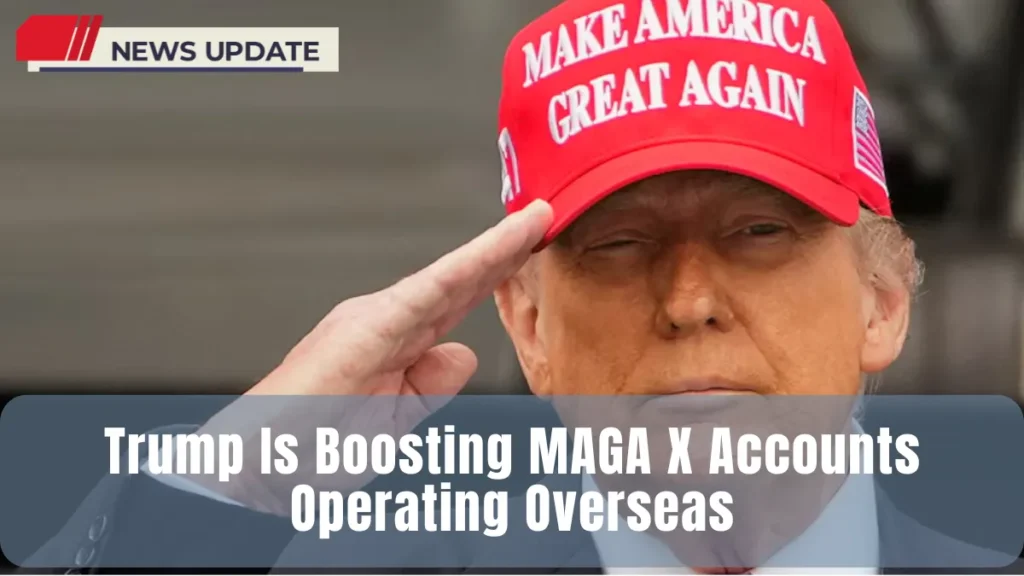

Donald Trump is now amplifying a growing network of MAGA-aligned X (formerly Twitter) accounts operating from outside the United States, according to analysts tracking political messaging and social media influence. Many of these accounts promote pro-Trump narratives, attack his political opponents and push election-related messaging that appears coordinated. Experts warn that this pattern could blur the lines between organic support and foreign-based influence operations at a critical moment for U.S. political discourse.
Overview of the Overseas MAGA X Network
| Category | Key Insight |
|---|---|
| Origin of Accounts | Significant number traced to overseas regions |
| Main Activity | Pro-Trump messaging, anti-opposition attacks, viral amplification |
| Trump’s Role | Direct boosts, reposts and engagement from his official account |
| Potential Risk | Foreign influence shaping U.S. political debates |
| Expert Concern | Lack of transparency about account authenticity |
Why Trump’s Boosting of These Accounts Is Drawing Attention
Social media researchers have observed that many MAGA-branded X accounts posting around the clock originate from regions in Eastern Europe, South Asia and the Middle East. Despite unclear verification, Trump regularly reposts content from several of these accounts, increasing their visibility to millions of followers. This pattern gives foreign-based pages major influence in shaping political narratives inside the United States.
How These X Accounts Shape Online Narratives
The accounts often promote identical talking points within minutes of each other, suggesting coordinated behavior rather than organic grassroots activism. They frequently spread pro-Trump slogans, question U.S. institutions and amplify attacks on journalists, prosecutors and political rivals. Once boosted by Trump, these posts gain rapid traction and circulate widely through the MAGA ecosystem.

Experts Warn of Potential Foreign Influence Risks
Analysts note that while the accounts may not be officially affiliated with foreign governments, their geographic origin raises questions about motivation and authenticity. Influence-monitoring groups highlight concerns that election-related narratives—especially those targeting trust in institutions—could be manipulated by actors outside the U.S. with limited accountability or transparency.
Why These Networks Thrive on X
Under Elon Musk’s ownership, X has reduced moderation staffing and loosened content visibility restrictions. This environment has allowed political networks, including overseas accounts, to gain reach quickly. Trump’s reposts act as force multipliers, helping lesser-known accounts gain legitimacy and credibility among his follower base.
Single Bullet List: Why Analysts Are Concerned About the Trend
• Foreign-based political accounts can shape U.S. debates without transparency
• Coordinated messaging patterns resemble organized influence activity
• Trump’s amplification gives these accounts disproportionate reach
• Election-related narratives may be distorted by non-U.S. actors
• Reduced platform moderation increases the spread and visibility of such content

Impact on Voters and Online Discourse
With major political moments approaching, the rise of foreign-based MAGA accounts boosts the spread of misinformation, inflames partisan divides and complicates efforts to track genuine voter sentiment. Experts say that when leading political figures amplify questionable sources, it becomes harder for the public to distinguish authentic voices from coordinated networks.
Growing Concerns About Election Integrity Discussions
The accounts frequently target U.S. election systems, amplifying claims of fraud or conspiracy. Experts worry this may undermine public confidence in the 2026 and 2028 election cycles. Researchers argue that foreign-origin accounts promoting partisan talking points could unintentionally—or intentionally—shape voter attitudes.
Conclusion: Trump’s consistent promotion of MAGA-aligned X accounts operating overseas highlights a growing challenge in modern political communication. As these foreign-based networks gain influence, experts warn that U.S. political narratives are increasingly vulnerable to coordinated, unverified and potentially deceptive social media activity. Ensuring transparency and media literacy will be essential as online influence campaigns continue to evolve.

Disclaimer: This article provides general analysis based on expert observations, social media research and publicly available data. The activity, origins and motivations of specific accounts may evolve, and readers should rely on verified reporting, official statements and credible research organizations for the most accurate understanding of ongoing online influence trends.