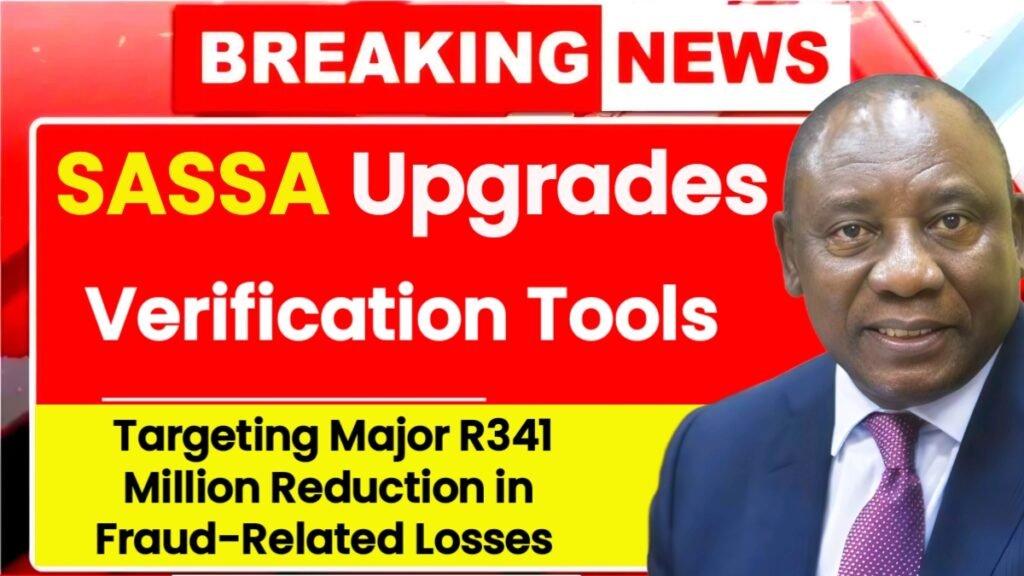

SASSA has officially announced a massive verification system upgrade for 2026, introducing stronger digital, biometric, and banking checks to curb the rising levels of fraud linked to social grants. The agency’s goal is to reduce losses by an estimated R341 million, while improving accuracy and speeding up payment processing across all grant categories.
What Triggered SASSA’s 2026 Verification Upgrade
SASSA reported rising losses due to fake applications, identity theft, duplicate payments, inactive bank accounts, and manipulation of income declarations. The agency aims to modernize its systems to better authenticate beneficiaries and block fraudulent submissions before payments are released.

How the New Verification Tools Work
The upgraded system introduces real-time data matching across multiple national databases. When beneficiaries update their details or apply for grants, SASSA will immediately cross-check ID numbers, banking information, facial recognition data, and income activity. Any mismatch automatically flags the account for review, reducing manual processing delays.
| Update Type | What’s New for 2026 | Goal |
|---|---|---|
| Digital Verification | AI-driven ID & income checks | Reduce identity fraud |
| Biometric Tools | Facial & fingerprint reconfirmation | Stop duplicate claims |
| Bank Account Validation | Real-time matching system | Prevent misdirected payments |
| SRD Screening | Monthly automated income reviews | Block ineligible applicants |
| Fraud Prevention Target | R341 million reduction | Strengthen grant integrity |
Impact on Permanent Grants
Older Persons, Disability, Child Support, Foster, and Care Dependency beneficiaries will undergo periodic verification during 2026. Seniors may be asked to reconfirm identity digitally. Disability beneficiaries will follow stricter reassessment timelines, and guardians for children’s grants must maintain fully updated household income records.

Impact on SRD R350 Beneficiaries
The SRD grant will see the most significant tightening. Monthly income checks will use advanced automated screening tools, making it harder for ineligible applicants to slip through. Bank accounts must match exactly with the ID provided, and applicants may face rapid facial verification prompts when updating details.
Who Must Recheck Their Details Before 2026
Beneficiaries who changed phone numbers, switched banks, renewed IDs, moved to new addresses, or recently updated documents must verify their information. This ensures smooth payments when the upgraded system launches. Incorrect details may cause a temporary “Pending Verification” status.
Conclusion:
SASSA’s 2026 verification upgrade introduces stronger fraud-prevention tools that are expected to save the agency R341 million in losses. With enhanced biometric checks, digital screening, and real-time bank validation, beneficiaries will experience a more secure and reliable payment process. Staying updated and ensuring accurate personal details will be crucial for uninterrupted grant payments.
Disclaimer: This article summarizes publicly available information regarding SASSA’s planned 2026 verification upgrades and fraud-reduction goals. Actual rollout timelines, verification steps, and system requirements may vary once official notices are issued. Beneficiaries should always confirm updates through SASSA’s official channels or local offices.