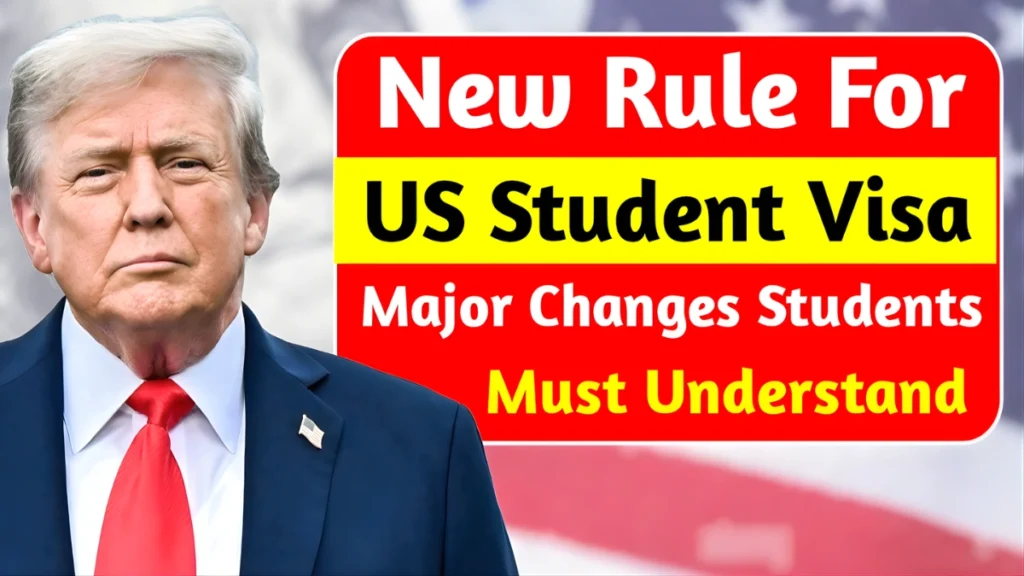

US Study Visa: The United States is implementing significant changes to student visa policies for 2025, affecting new applicants, continuing international students, academic institutions, and post-graduation work options. These shifts reshape how students apply, maintain status, and transition into employment after studies.
What Triggered the New Student Visa Rules
US Study Visa- These changes are driven by immigration monitoring updates, national security concerns, and workforce planning objectives. The United States aims to balance student admission numbers with legitimate educational intent, reduced visa misuse, and improved clarity in compliance requirements.
New Academic and Financial Documentation Requirements
Applicants must now demonstrate clearer academic intent and verifiable funding proof for tuition and living costs. Financial transparency has become vital to avoid visa rejection. Institutions may also request additional documentation confirming real study purpose and academic placement.
Visa Eligibility & Rule Adjustment Table for 2025
| Visa Element | Old Requirement | New 2025 Requirement |
|---|---|---|
| Financial Proof | Bank statements | Verified funding documentation with authenticity check |
| Full-Time Status | Required | Strictly monitored through digital attendance and reporting |
| OPT Approval | Standard processing | Stricter screening for course-to-job relevance |
| Visa Duration | Standard term | May be shortened or extended based on compliance |
| Working Hours | 20 hrs on-campus | Increased monitoring with potential penalties for violations |
This demonstrates a shift toward authenticity proof, monitoring, and compliance enforcement.
Tightened Monitoring of Visa Status
Schools and immigration authorities will now monitor student enrollment in real time. Dropping below full-time status, prolonged absence, unauthorized off-campus work, or non-academic enrollment behavior may trigger immediate warnings or visa review.
Stricter Optional Practical Training (OPT) Evaluation
Applicants for post-study employment under OPT must show that their job aligns directly with their degree subject. Students with mismatched employment or vague job descriptions may face delays or rejection in OPT authorization.

Changes to Work and Internship Regulations
On-campus work limits remain, but verification processes now emphasize real compliance. Off-campus internships demand prior documented approval tied specifically to an academic requirement or authorized training program.
Visa Denial Causes That Will Increase
More visa applications will be denied for:
- Unclear academic intent
- Insufficient or unverifiable funding
- Lack of clarity in study-to-career plan
- Inconsistent academic records
- Weak English proficiency documentation for certain applicants
These weaknesses will now be specifically flagged during screening.
What International Students Should Do Now
Prospective students should prepare clean documentation of their academic objectives, verified financial support, and a transparent post-graduation plan. Current students should maintain strong attendance, adhere to employment limits, and consult immigration services before making major academic changes.

Conclusion: The 2025 student visa changes are meant to encourage genuine academic enrollment and responsible compliance with U.S. immigration law. International students who prepare thoroughly and follow regulations closely should remain fully eligible and secure in maintaining their visa status.
Disclaimer: This article is informational and does not constitute legal immigration advice. Visa eligibility and enforcement are determined by official U.S. immigration officials and academic institution guidelines. Every student’s case may vary based on personal documentation and compliance record.